
 EN

Mono-Material vs Multi-Material: Cost and Recyclability Compared on Three Real Specs
Since 12 August 2026, the EU's Packaging and Packaging Waste Regulation (PPWR) applies in full. Two of its rules change what gets decided at the drawing stage, not on the filling line: packaging must be designed for recycling, and from 1 January 2030 plastic packaging has to meet minimum recycled-content targets.
For skincare and personal-care brands, that usually comes down to one question: mono-material or multi-material?
We mould, decorate and assemble bottles in Hangzhou — PET, HDPE, PP and glass, with pumps, caps, droppers, collars and sprayers. Below are three specs from our 2026 sample library, compared on the same basis.
How we compared
·All three quoted at 30,000 pcs, FOB Ningbo, decoration and assembly included.
·Cost is shown as an index with Spec A = 100. It is a shape, not a price list — size, colour and MOQ will move it.
·Recyclability is judged on two practical things: can the pack be sorted into an existing stream (PET, HDPE, glass), and can the consumer separate its parts without tools.
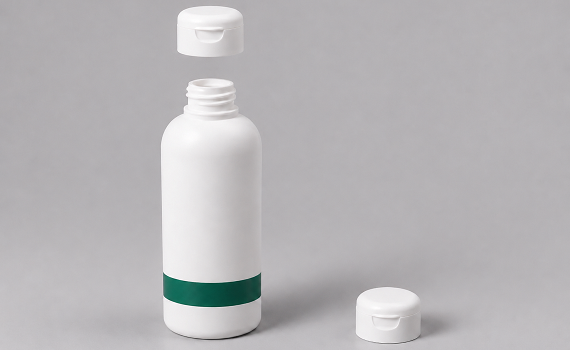
Spec A — 250 ml HDPE shampoo bottle, mono-material
Structure: HDPE bottle + HDPE cap + one-colour screen print. No sleeve, no metallised parts. Cost index: 100 Recyclability: Strong. Bottle and cap are the same resin family, so the pack drops into the HDPE stream without the consumer taking anything apart. Direct print leaves the surface clean for reprocessing. Trade-off: decoration is limited. Screen print and in-mould labelling work well; full-wrap photographic graphics do not. If your brand story depends on imagery, this is where the argument starts to hurt.
Spec B — 50 ml PET serum bottle, multi-material
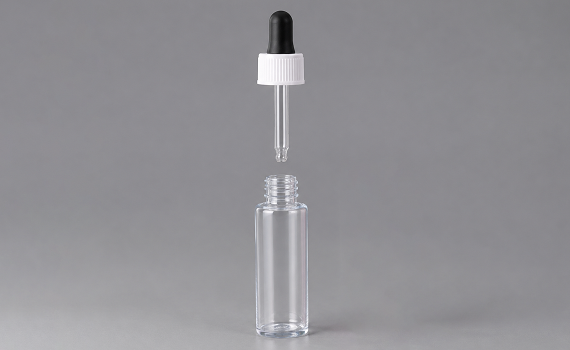
Structure: PET bottle + PETG full-body shrink sleeve + metallised PP collar + PP dropper. Cost index: 165–180 Recyclability: Weak. The sleeve has to be cut away before the bottle enters the PET stream, and in real life most consumers will not. Metallised collars and mixed-resin droppers are rarely separated either. Against PPWR design-for-recycling criteria, this is the hardest combination to defend. Trade-off: it sells. High gloss, full coverage, premium weight in the hand. This spec exists because it works on shelf — we are not going to pretend otherwise.
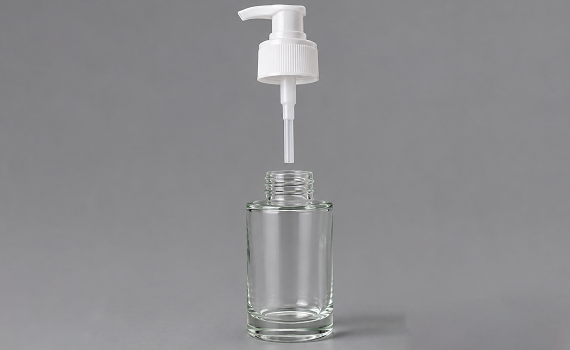
Spec C — 50 ml glass serum bottle with pump
Structure: clear glass bottle + PP pump + aluminium collar, no sleeve. Cost index: 190–210 Recyclability: Mixed but workable. Glass is collected in a mature stream and recycles without loss of quality, repeatedly. The problem is everything attached: pump, collar and dip tube must come off before the bottle goes in the bin. Small glass containers are also screened out of some collection systems. Freight weight runs several times an equivalent PET bottle, which shows up in cost and in scope 3 emissions. Trade-off: weight, breakage risk and a higher unit price — in exchange for premium perception and, if you design for it, refill potential.
The three specs in one line each
·Spec A — HDPE bottle, HDPE cap, screen print only. Cost index 100. It goes into the HDPE stream exactly as it is: nothing to pull apart, no instructions needed at the sink. Built for high-volume body care, where the artwork is simple and the volume is not.
·Spec B — PET bottle, PETG sleeve, metallised PP collar, PP dropper. Cost index 165–180. It is recyclable as PET only if someone cuts the sleeve away and pulls the dropper out, and in practice both stay in. Built for premium serums and launch SKUs, where the shelf impression is the whole point.
·Spec C — Glass bottle, PP pump, aluminium collar. Cost index 190–210. Glass recycles well, repeatedly, but the pump, collar and dip tube have to come off first, and the pack ships several times heavier than the same volume in PET. Built for prestige lines and refill programmes.
Read them together: cost and recyclability usually point the same way, and decoration is what breaks the link.
Where the cost actually goes
·Resin and weight.The bottle is rarely the expensive part; the closure often is. A pump can cost more than the bottle it sits on.
·Decoration.Sleeves add material, tooling and a second process. Direct print adds one pass. Soft-touch and metallised coatings are the cheapest way to look expensive and the fastest way to lose recyclability.
·Assembly.Bottle, pump, collar, cap and any insert arrive as separate components. Someone has to put them together, test them and pack them.
·Freight weight.Glass is the obvious case, but over-thick PET walls cost you the same way on every container.
·MOQ and tooling.A mono-material redesign can mean a new mould. That is a one-off cost that has to be amortised over volume, and it is usually the real reason projects stall.
What we tell brands before they choose
1. Decide what the pack has to do on shelf first,then engineer backwards. Recyclability is a constraint, not a brief.
2. If you need full-wrap graphics, ask whether a compatible sleeve exists — a PE sleeve on an HDPE bottle behaves very differently from a PETG sleeve on PET.
3. Design the separation step.If the consumer needs scissors, they will not do it.
4. Check the EPR fee.In several EU markets, producer fees are already modulated by recyclability, so a cheap bottle can carry a permanent annual cost.
5. Model 2030 now.Recycled-content targets mean today's resin choice is a 2030 decision, and PCR supply is contracted years ahead.
What we can do on our side
We run injection and blow moulding, glass sourcing, in-house decoration — screen print, hot stamping, coating, labelling — and pump and cap assembly under one roof. rPET, rHDPE and rPP grades are available with certificates, and we issue a material and recyclability declaration per SKU on request.
Send us your current spec sheet, or the shelf reference you are trying to beat. We will come back with two structures — one mono-material, one not — and the cost and recyclability difference in numbers